You spent months finding the right orthopedic surgeon. You did your pre-surgical exercises, stopped your blood thinners on schedule, and showed up on time. The surgery went beautifully.
And then you went home.
Here is the part nobody talks about during the consultation. What happens in those first days at home shapes your outcome more than almost anything that happened in the operating room. Surgery is the event. Recovery is the journey. And for far too many patients, that journey goes sideways within the first 72 hours.
The Readmission Problem Is Real
A New England Journal of Medicine study looked at nearly 480,000 Medicare surgical discharges across more than 3,000 hospitals and found that the median 30-day readmission rate after major surgery was 13.1 percent. Hip and knee replacements come in around 5 to 6 percent on their own. Those numbers might sound manageable until you learn that Medicare spends an estimated $17.4 billion every year on unplanned readmissions, and a significant share of orthopedic readmissions trace back to preventable failures at home.
It gets tougher with age. Research published in the surgical literature followed patients 60 and older after major surgery and found it took six weeks to three months just to recover basic daily activities, and up to six months for more complex independent living. Patients who were frail going in fared significantly worse. In plain English: the older the patient, the more skilled support matters during recovery.
Orthopedic specialists put it simply. Older patients should not stay sedentary too long, and they should not push too hard too soon. Finding that balance on your own, while groggy and in pain, is nearly impossible without professional guidance at home.
What Happens Without Skilled Home Support
Picture a patient who just had a total knee replacement. She is discharged with a list of exercises, a pain management prescription, a compression stocking, and instructions for incision care. Her daughter picks her up. By that evening, she has already missed her first medication dose because nobody reminded her. The ice pack that should have gone on for 20 minutes every hour is still sitting in the freezer. By day two, the swelling is worse. By day three, she calls the surgeon’s office. By day seven, she is in the emergency room.
The surgery did not fail her. The recovery plan did. Or more accurately, the lack of one.
What Skilled In-Home Nursing Actually Delivers
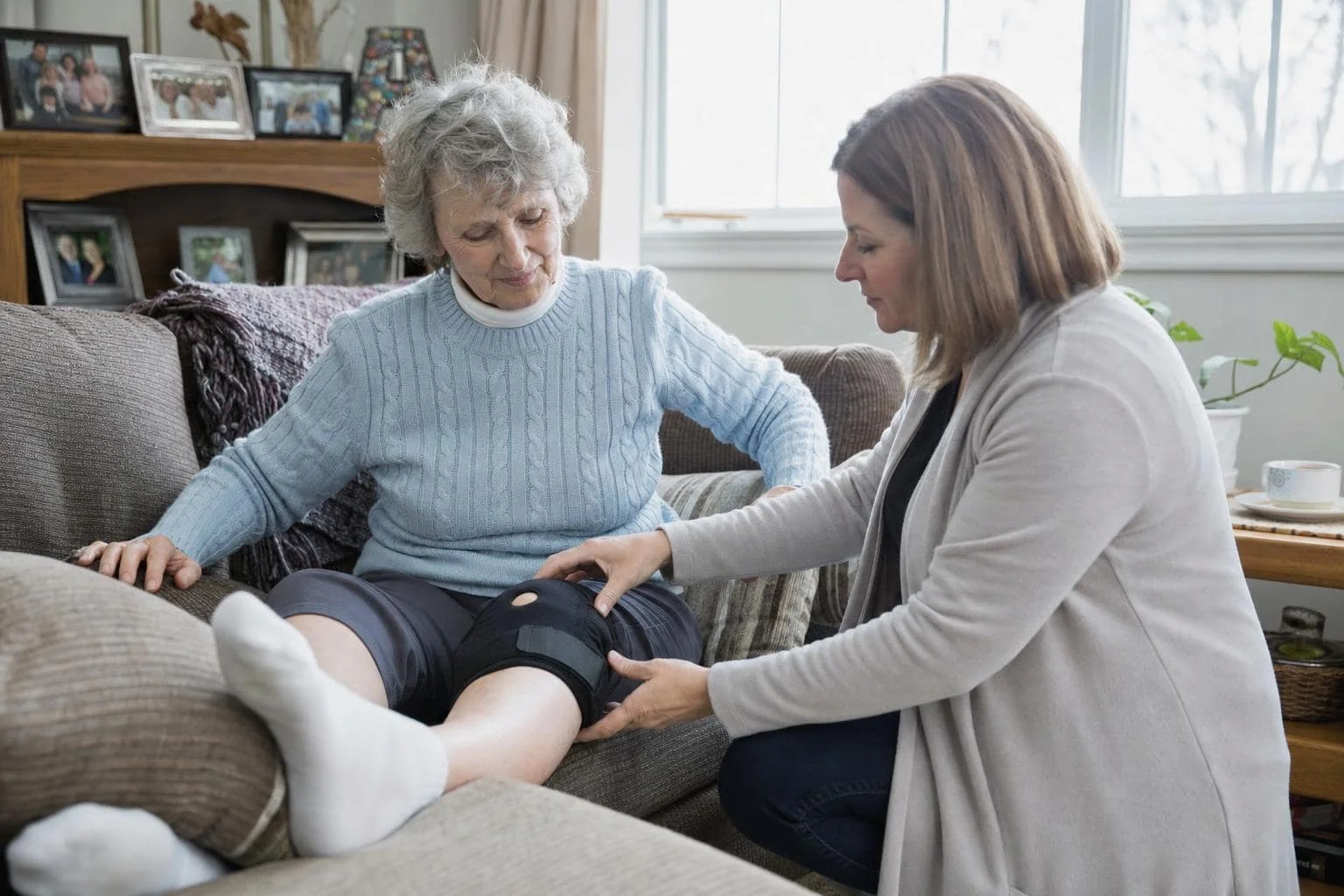
A private duty RN from Living Care Home Services arrives at your home the same day you are discharged, with your surgeon’s exact post-operative protocols in hand. They monitor your vitals, manage your medications, apply ice correctly, assist with mobility, change your dressings, and call your surgeon’s office directly if anything changes.
And the results back it up. Dedicated in-home nursing has been shown to reduce 30-day readmissions by up to 60 percent and complication rates by roughly 30 percent.
This is not a hospital. This is your home. The recovery that happens there, in those first critical days, determines whether the procedure you invested in delivers the outcome you were promised.
Plan Your Recovery Before Your Surgery
At Living Care, we recommend reaching out one to two months before your scheduled procedure. That gives our team time to coordinate with your surgeon, build a personalized recovery plan, and have the right nursing resources ready the moment you leave the surgical center.
Your surgery is a moment. Your recovery is a journey. Give both the same level of care and planning.
Learn more about our post-operative recovery program or start planning your recovery today — or call us at (215) 348-4008.