Most people put a lot of thought into the procedure. The surgeon, the facility, the outcome. What they do not always think about is what comes next, and that is usually where things get complicated.
The days and weeks after surgery are when a lot of recoveries go sideways. Not because of anything that happened in the operating room, but because managing recovery at home is genuinely hard. Patients leave the hospital with a stack of discharge instructions and the expectation that they will figure it out. Sometimes they do. Often, they struggle.
Going Home Is Not the Finish Line
Discharge paperwork can be overwhelming. Medication schedules, wound care, drain management, activity restrictions, follow-up appointments, dietary guidelines, and a list of warning signs to watch for. That is a lot to absorb when you are still groggy, in pain, and just want to be home.
Even motivated, organized patients run into trouble. Pain, fatigue, and medication side effects make it hard to stay on top of everything. Family members want to help but often are not sure what they are looking at or what to do. Small things get missed. Small things become bigger things.
Medications Are Tricky
Post-operative medication regimens are not simple. Patients may be juggling pain medications, antibiotics, blood thinners, anti-nausea medications, plus whatever they were already taking before surgery, all on a schedule that keeps changing as recovery progresses.
Missing a dose, taking something at the wrong time, or failing to catch a reaction can set a recovery back significantly. Having someone in the home who tracks the schedule and flags concerns early makes a real difference.
The Little Things Add Up
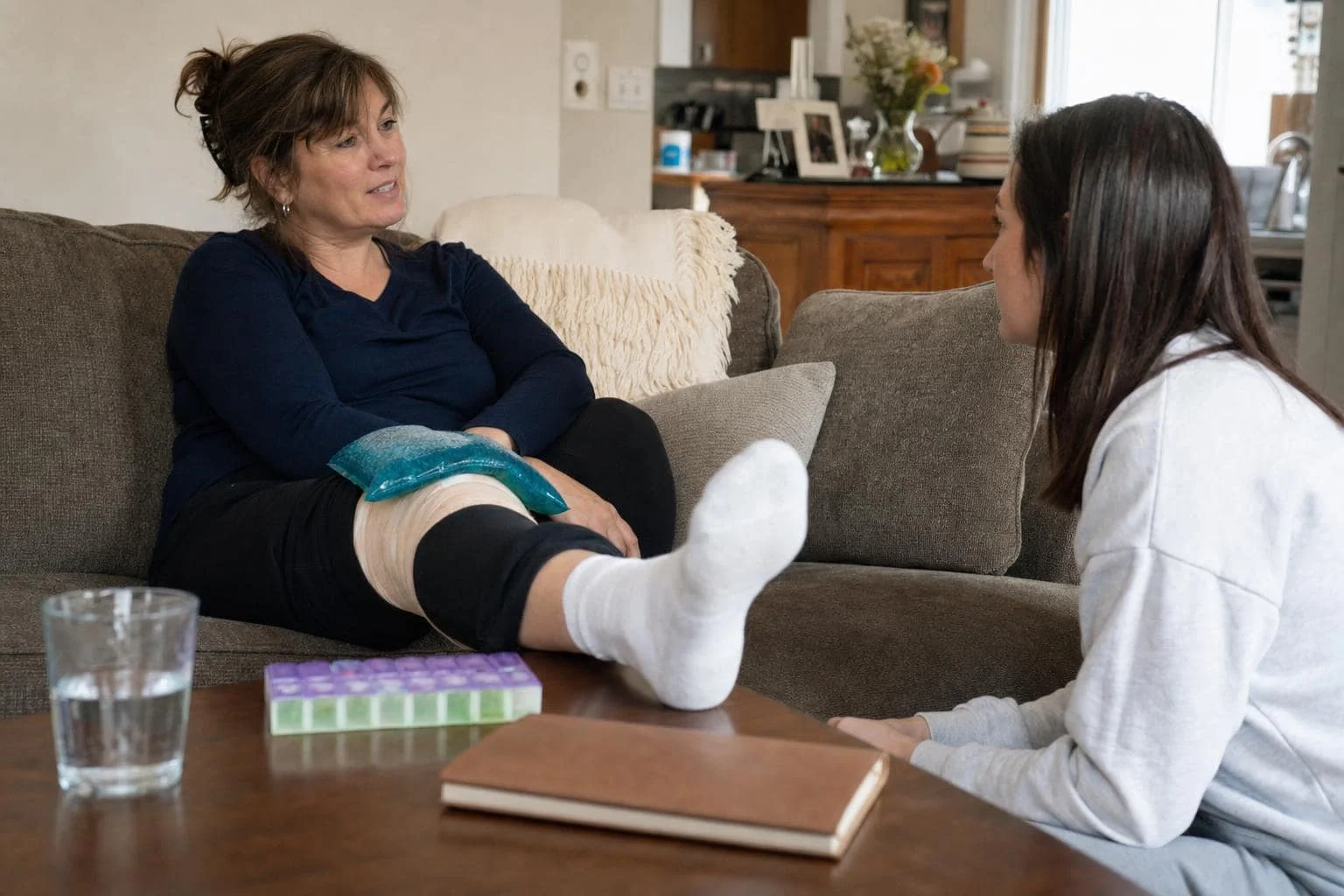
Icing. Elevation. Movement restrictions. Those instructions feel straightforward in the surgeon’s office, but at home, when you are uncomfortable and just want to sit normally or walk to the kitchen, they are easy to let slide.
Patients push too hard too soon, or stay sedentary too long because they are afraid of doing something wrong. They forget to ice, or they ice longer than they should. None of it feels like a big deal in the moment, but consistently missing the basics leads to more swelling, more pain, slower healing, and sometimes another trip to the doctor.
Drains and Wound Care Cause Real Anxiety
For patients sent home with surgical drains, the anxiety is real. Emptying drains, recording output, knowing what normal looks like versus what needs a call to the physician. It can feel like a lot of responsibility for someone who has never dealt with it before.
Wound care is the same story. Knowing when to change a dressing, what to look for, and when something warrants a call is clinical knowledge most families simply do not have. Catching a wound issue early, like redness, unusual drainage, or signs of separation, can keep a minor setback from becoming a serious complication.
Recovery Takes a Mental Toll Too
The physical side of recovery gets most of the attention, but the emotional side is just as real. A lot of patients feel genuine anxiety during recovery. Fear of damaging the repair, worry about pain levels that do not feel right, disrupted sleep, a sense of isolation. That anxiety undermines recovery in concrete ways: more stress, less sleep, less follow-through on the care plan.
Having consistent support, someone present, reassuring, and knowledgeable, helps patients feel less alone and more confident that they are doing things right.
Most Readmissions Are Preventable
The reasons patients land back in the hospital after surgery are largely the same every time: medication errors, infections that were not caught early, falls, dehydration, or complications that went unnoticed until they escalated. These are not inevitable. They are usually the result of gaps in support during those first critical days at home.
When there is a trained set of eyes in the home, someone who knows what to watch for and who to call, most of those situations get caught before they become emergencies.
What This Means for Patients, Families, and Surgeons
For patients, the right recovery support means a faster return to normal, fewer complications, and less anxiety along the way.
For families, it means peace of mind. Someone qualified is there, and they do not have to figure it all out on their own.
For surgeons and referring physicians, it means the work done in the OR has the best possible chance of turning into a great outcome. Fewer readmissions. Fewer preventable complications. Patients who actually follow the care plan.
How Living Care Fits In
At Living Care Home Services, our post-operative recovery support is built around one simple idea: the plan your surgeon put together deserves to be followed.
Our caregivers and clinical team work alongside patients through recovery, helping with medication reminders, mobility, icing and elevation schedules, drain monitoring, wound observation, fall prevention, nutrition, and transportation to follow-up appointments. We keep families informed and communicate with healthcare providers when something needs attention.
Recovery does not end at discharge. With the right support in place, it can go the way it was supposed to.
Learn more about our post-operative recovery program or start planning your recovery today — or call us at (215) 348-4008.